
Table of Contents
- Introduction to E-Commerce Evolution
- Defining E-Commerce 5.0
- The Core Technologies Driving E-Commerce 5.0
- Personalization at a New Level
- Seamless Omnichannel Experiences
- Sustainability and Ethical E-Commerce
- Enhanced Security and Trust
- Impact on Businesses and Consumers
- Challenges and Risks in E-Commerce 5.0
- The Future Outlook

Introduction to E-Commerce Evolution
E-commerce has constantly developed since its early days, adapting to new technologies and shifting consumer reactions. Starting from simple online catalogs and static websites in E-Commerce 1.0, the landscape has progressed through various stages—introducing secure online payments, mobile commerce, social media inclusion, and AI-powered suggestions. Each phase has reshaped the way businesses connect with customers, making shopping more comfortable and personalized. Now, with the arrival of E-Commerce 5.0, the industry is poised for another major transformation. This new stage harnesses advanced technologies like artificial intelligence, augmented reality, and blockchain to create hyper-personalized, immersive, and seamless shopping experiences that blur the lines between digital and physical retail. Understanding this evolution is key to appreciating how E-Commerce 5.0 will redefine the future of buying and selling online.
Defining E-Commerce 5.0
E-Commerce 5.0 represents the next frontier in online retail, described by the unification of cutting-edge technologies that create deeply personalized, enchanting, and intelligent shopping experiences. Unlike previous revisions, which focused on improving access, comfort, and mobile integration, E-Commerce 5.0 emphasizes a seamless blend of the physical and digital worlds through technologies such as artificial intelligence (AI), augmented reality (AR), virtual reality (VR), blockchain, and the Internet of Things (IoT). This stage shifts beyond simple transactions to deliver predictive, adaptive, and highly interactive customer journeys tailored to individual preferences and needs. E-Commerce 5.0 also champions transparency, security, and sustainability.
The Core Technologies Driving E-Commerce 5.0
E-Commerce 5.0 is operated by a suite of advanced technologies that work together to transform the shopping experience. Artificial intelligence (AI) and machine learning enable personalized recommendations, predictive analytics, and smarter customer service through chatbots and virtual assistants. Augmented reality (AR) and virtual reality (VR) bring products to life by allowing customers to envision and interact with items in immersive environments before making a purchase. Blockchain technology enhances security and transparency by providing devolved and tamper-proof transaction records, while also enabling innovations in payment methods and supply chain tracking. The Internet of Things (IoT) connects devices and products, enabling smarter inventory management and seamless merging across channels. Lastly, the rollout of 5G networks ensures faster, more reliable connection, supporting these technologies to deliver real-time, interesting, and frictionless shopping experiences.

Personalization at a New Level
One of the defining features of E-Commerce 5.0 is its ability to deliver hyper-personalized shopping experiences tailored to each entity customer. Leveraging advanced AI and prescient analytics, online stores can analyze vast amounts of data—from browsing behavior and purchase history to social media activity—to anticipate customer needs and preferences with remarkable accuracy. This enables brands to offer highly relevant product suggestions, personalized campaigns, and customized content in real time. Furthermore, AI-powered chatbots and virtual shopping assistants provide instant, tailored support, guiding shoppers through their journey and enhancing interaction. By making every interaction unique and significant, E-Commerce 5.0 transforms how consumers discover products and build loyalty, setting a new standard for personalized retail.

Seamless Omnichannel Experiences
E-Commerce 5.0 takes omnichannel retail to a whole new level by fully integrating online and offline shopping environments into a smooth, consistent experience. Consumers today expect to switch seamlessly between devices, platforms, and physical stores without losing continuity or convenience. This means unified customer profiles, coordinated inventories, and real-time data sharing across all touchpoints—from mobile apps and websites to brick-and-mortar stores and social media channels. Social commerce and live shopping events have also become essential parts of this ecosystem, enabling brands to engage customers directly through interactive and real-time content. By breaking down traditional barriers between channels, E-Commerce 5.0 creates a holistic shopping journey that is bendable, convenient, and highly engaging for consumers.
Sustainability and Ethical E-Commerce
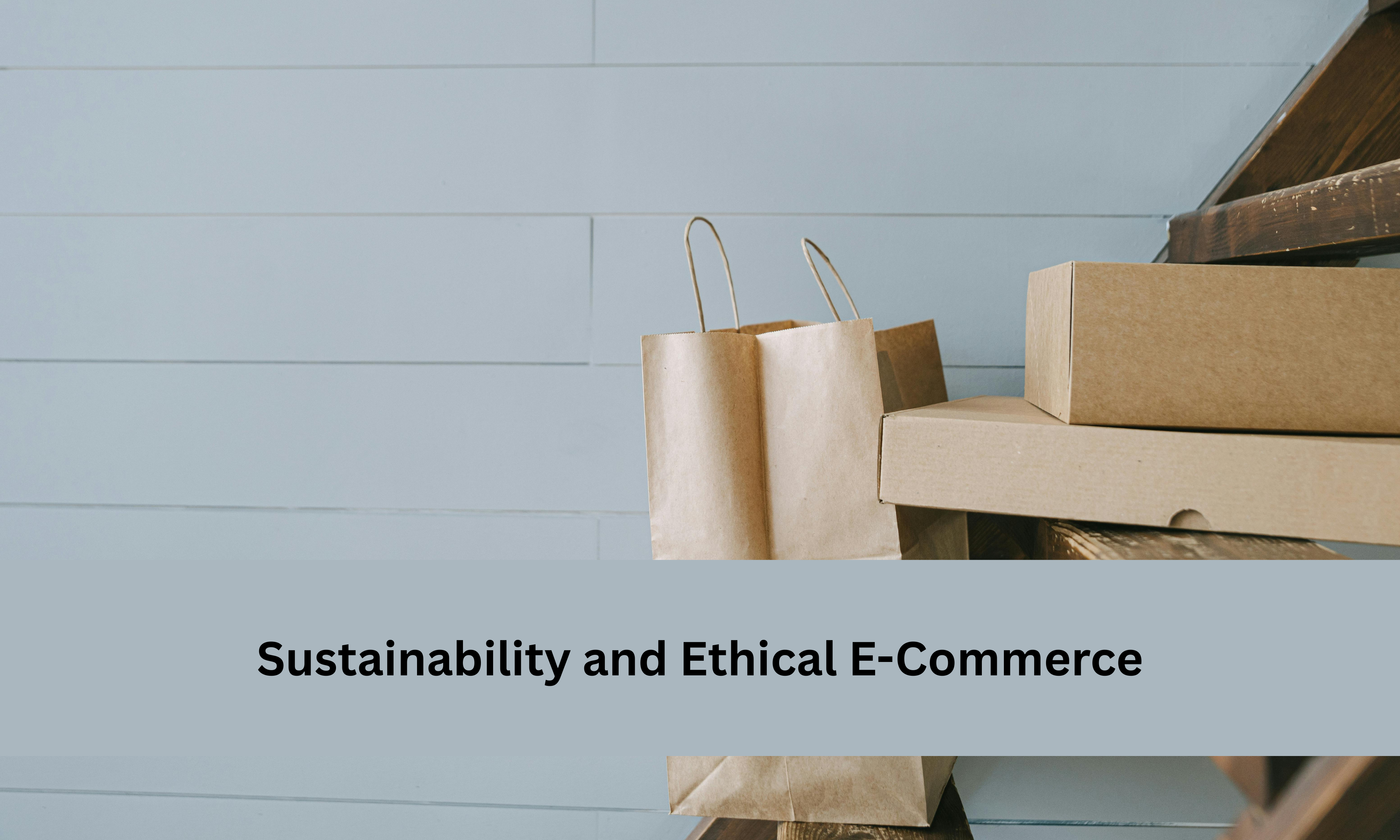
In the era of E-Commerce 5.0, sustainability and ethical practices have become central to both consumer hopes and business operations. Shoppers growing demand transparency about how products are sourced, manufactured, and delivered, pushing brands to adopt eco-friendly packaging, carbon-neutral shipping, and responsible supply chain management. Blockchain technology plays a key role by enabling transparent, tamper-proof tracking of products from origin to delivery, ensuring genuineness and ethical compliance. Additionally, companies are focusing on reducing waste, supporting fair labor practices, and promoting circular economy models such as recycling and product reuse. By prioritizing durability
and ethics, E-Commerce 5.0 not only appeals to mindful consumers but also helps build long-term trust and loyalty in a competitive marketplace.

Enhanced Security and Trust
As E-Commerce 5.0 advances, security and trust become more critical than ever. With increasing online deals and data sharing, consumers demand stronger protections for their personal information and payment details. Blockchain technology plays a vital role by offering dispersed, tamper-proof records that increase openness and reduce fraud. AI-driven systems also help detect and prevent cyber threats in real time, safeguarding both businesses and customers. moreover, improved identity verification methods enhance privacy and build confidence in digital interactions. Together, these developments create a safer, more trustworthy e-commerce environment where consumers can shop with peace of mind.
Impact on Businesses and Consumers
E-Commerce 5.0 is reshaping the landscape for both businesses and consumers in profound ways. For businesses, adopting these advanced technologies means staying ambitious by offering highly personalized, seamless, and secure shopping experiences that meet modern customer expectations. Companies can leverage data-driven insights to optimize inventory, marketing, and customer service, while new business models—such as subscription services and “try before you buy” options—create fresh revenue streams. For consumers, E-Commerce 5.0 delivers Unmatched accessibility, speed, and trust, making online shopping more enjoyable and efficient. The enhanced personalization and engaging technologies also help shoppers discover products better suited to their needs. eventually, this evolution fosters stronger connections between brands and customers, driving loyalty and growth.Impact on Businesses and Consumers
Challenges and Risks in E-Commerce 5.0
While E-Commerce 5.0 promises exciting innovations, it also brings new challenges and risks for businesses and consumers alike. One major hurdle is the adoption of advanced technologies, which can require significant investment and technical expertise that smaller businesses may struggle to afford. Privacy concerns are another critical issue, as the extensive data collection needed for personalization raises questions about how customer information is stored and used, prompting stricter regulations. Additionally, the increasing reliance on digital platforms makes e-commerce vulnerable to cybersecurity threats, including hacking and fraud. Navigating these risks requires robust security measures, transparent data practices, and ongoing efforts to balance innovation with ethical considerations.

The Future Outlook
Looking ahead, E-Commerce 5.0 is set to fundamentally reshape the retail landscape over the next decade and beyond. As technologies like AI, AR/VR, blockchain, and IoT continue to mature and become more accessible, shopping experiences will grow even more personalized, immersive, and seamless. We can expect greater integration between physical and digital retail, with innovations such as smart stores, virtual fitting rooms, and real-time interactive shopping becoming commonplace. Additionally, sustainability and ethical practices will play a larger role as consumers demand more transparency and responsibility from brands. Businesses that embrace these changes early will gain a competitive edge, while those that lag risk falling behind in an increasingly dynamic market. Preparing for continuous evolution and staying adaptable will be key to thriving in the future of e-commerce.